INFODECK cartoon ink + office diagram energy

Why Letting Go Feels Dangerous (Even When You Want Relief)

The reframe: you’re not weak or sentimental—your brain is doing a job (protecting identity + safety signals).
Shame off Mechanism on Relief = fewer unresolved meanings

You Want Relief.
So Why Does Letting Go Feel Risky?

1 THE PARADOX
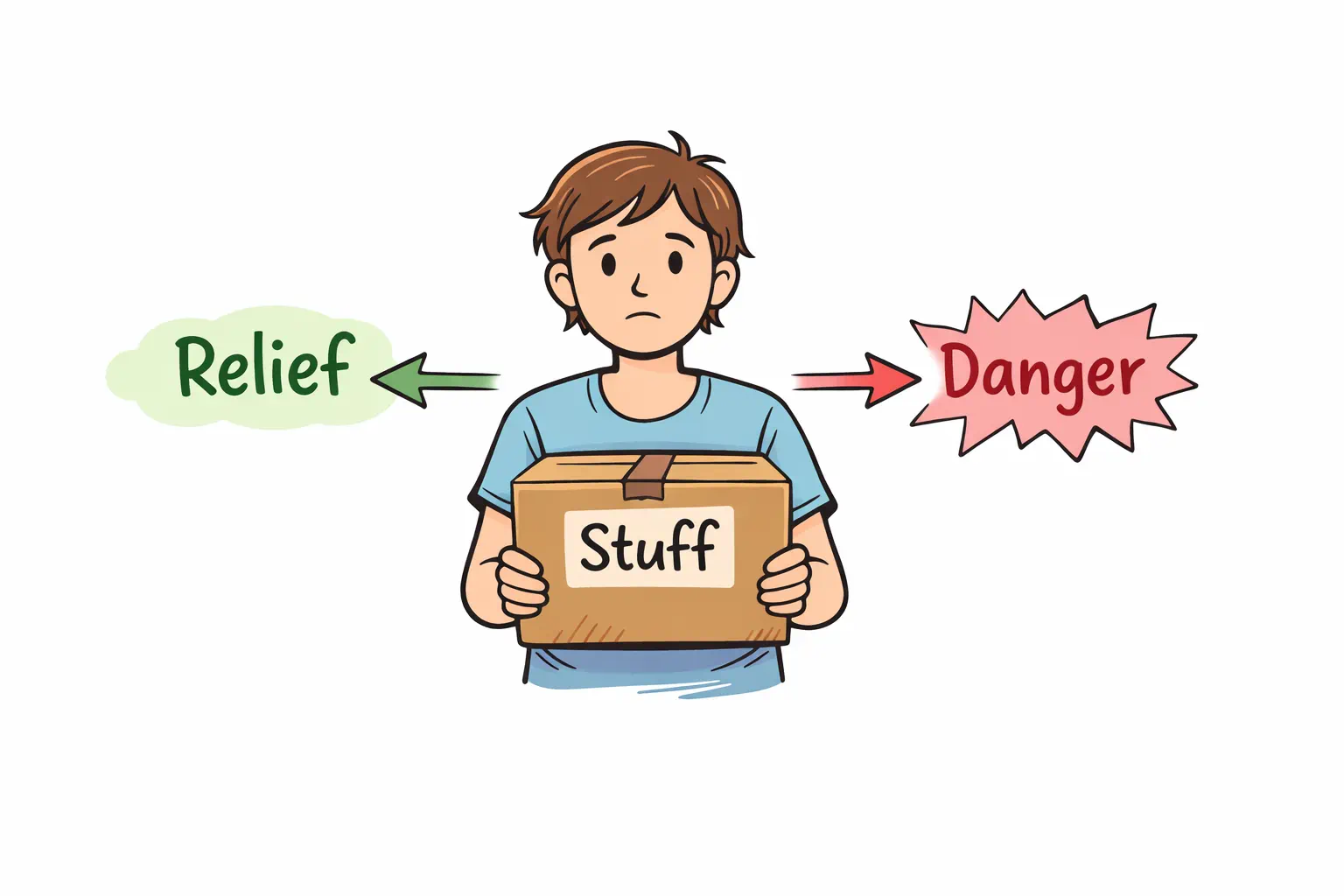
Optional illustration: person holding a box Stuff Relief Danger brain: “is this a trap?”
Hook image (optional) Suggested ratio: 4:3
Letting go doesn’t feel like losing things.
It feels like losing proof.

If resistance shows up fast, it’s not “laziness.” It’s your nervous system reading the moment as identity + safety on the line.

Objects Don’t Just Take Space.
They Hold Identity.

2 IDENTITY LINK

Every object you keep is tied to a version of yourself that once mattered.

Old textbooks

kept = evidence

Baby items

kept = connection

Hobbies

kept = possibility

Backup supplies

kept = safety

Translation: the object isn’t the point. The brain is protecting what it represents.
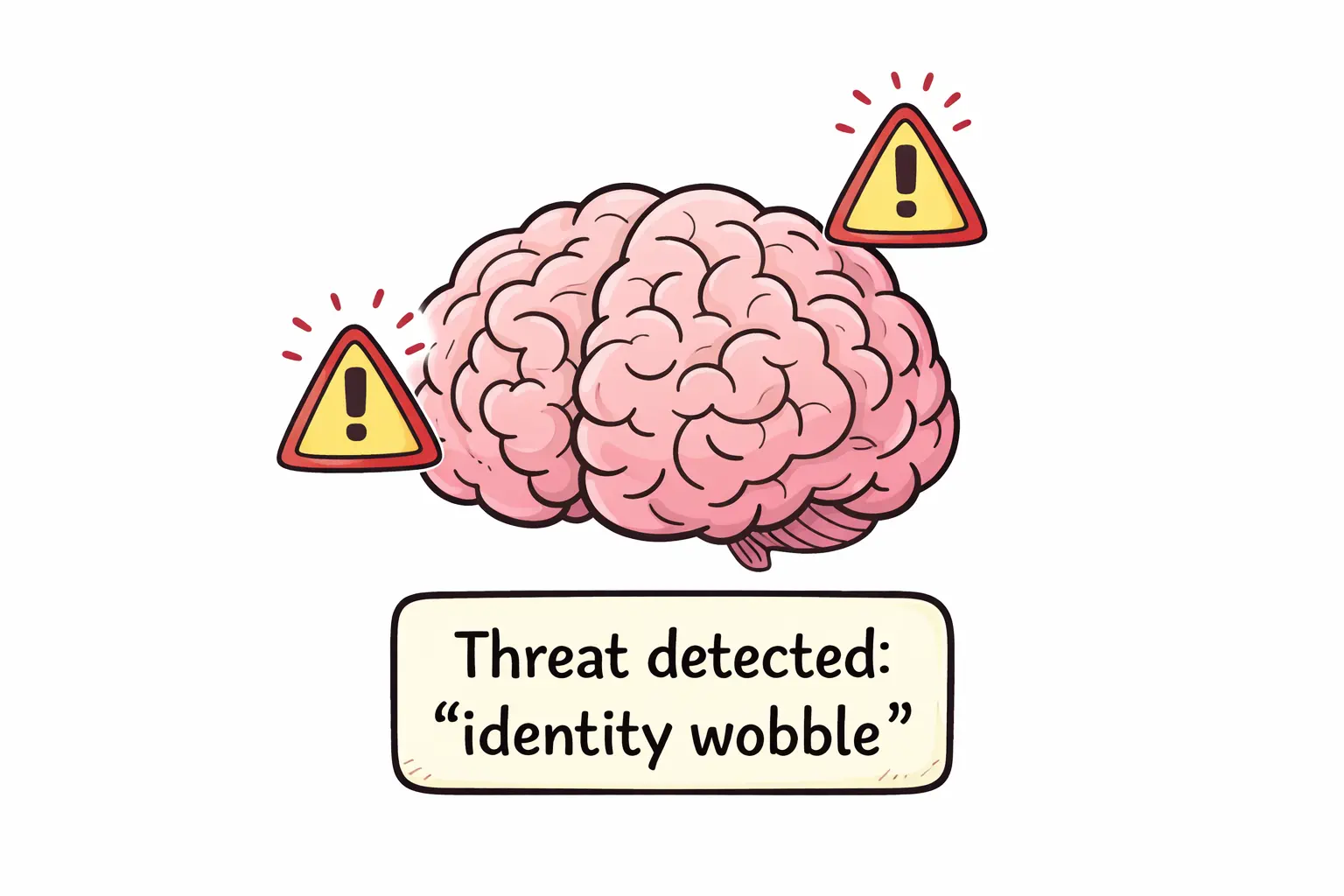
Your Brain Interprets Letting Go as Risk

3 DANGER SIGNAL
Optional illustration: brain with alert symbols Threat detected: “identity wobble” not drama — protection
Diagram hook (optional) Suggested ratio: 1:1
1
Object removed“this leaves the system”
2
Identity questioned“what does that say about me?”
3
Self-protection triggeredtighten grip / second-guess
4
Decision slowsavoidance = safety move
5
Exhaustiontoo many micro-threats
Aggressive purging triggers self-defense, not clarity.

Most Decluttering Advice Argues With Your Brain

4 THE MISTAKE

Common advice

  • “Be rational.”
  • “You don’t need this.”
  • “Just get rid of it.”

What actually happens

  • Brain tightens.
  • Decisions feel heavier.
  • Progress stalls halfway.
When the brain feels threatened, it slows everything down.

“Just be ruthless” sounds efficient… until your system treats it like a loss of self.

Letting Go Isn’t Discarding Value.
It’s Updating Relevance.

5 THE REFRAME
Past relevance Present mismatch

The meaning was real then. The obligation isn’t required now.

  • You’re not erasing meaning.
  • You’re acknowledging it fully.
  • Then releasing obligation.

(A brain-friendly move: recognize the chapter before you close the book.)

Acknowledgment neutralizes fear.
Storage does not.

Relief Comes From Fewer Unresolved Relationships

6 THE CLOSE
“Fewer items”
“Fewer unresolved meanings”
Clutter isn’t excess.
It’s unfinished emotional contracts.

Relief shows up when fewer items are asking, “What does this say about me?” — and getting no answer.

Use this sentence when you’re stuck: “I can honor what this meant… without keeping it on duty.”


Visit The Homepage | Check Us Out On Medium