
One Year Rule for Decluttering: A Practical Way to Decide What Actually Stays in Your Home

Closet shelves holding folded shirts you haven’t worn, kitchen cabinets storing duplicate gadgets, storage bins filled with cables, notebooks, or decor from a previous phase of life—this article is a how-to guide for making decisions about those exact items. It explains how to use the one year rule for decluttering in real rooms, with real constraints like limited time, shared space, and reluctance to discard usable things. This is not a full-home overhaul or a minimalist philosophy. The scope is narrow and practical: how to look at a specific item, ask one clear question about the past year, and decide what happens next without escalating the task.
The sections below walk through how the rule works, where it helps, and where it needs adjustment so it doesn’t create guilt or second-guessing. Each section resolves one decision point and can be read on its own.
What the One Year Rule for Decluttering Actually Refers To
The one year rule for decluttering applies to physical items sitting unused in drawers, closets, cabinets, and storage bins. Clothing, shoes, small appliances, hobby supplies, books, extra linens, and décor are the most common categories where the rule shows up. The basic instruction is simple: if you have not used an item in the past twelve months, it becomes a candidate for removal.
This is a how-to concept, not a command. The rule is designed to reduce decision fatigue by narrowing the question. Instead of asking whether you might need something someday, you are checking whether it has had a place in your real, recent life. A year matters because it usually includes all seasons, holidays, and routines. If an item did not surface during that cycle, it likely is not supporting your current household.
This rule does not require throwing things away immediately. It is a filter, not a disposal method. Items that fail the one year test move into a decision zone: donate, store elsewhere, recycle, or release. The rule works best when applied to one contained area at a time, such as a single closet rod or one kitchen drawer.
If an item is broken, expired, or duplicated, the one year rule simply confirms what you already know. If the item is functional but untouched, the rule gives you permission to pause and choose without reopening the entire room.
Why the One Year Rule Reduces Overthinking in Decluttering
Most clutter stalls happen when every item feels like a separate debate. Old jeans, unused blenders, half-finished notebooks, and extra cords all demand different reasoning. The one year rule for decluttering compresses those debates into one consistent check: did this item earn space through use?
This is a practical guide mechanism because it replaces speculation with evidence. You are not predicting future versions of yourself. You are observing past behavior. That shift matters when time and energy are limited. Instead of researching, comparing, or justifying, you are verifying.
The rule also creates a stopping condition. Once you determine that something has not been used in a year, you do not need to keep handling it repeatedly. It moves out of daily storage and into a short-term decision pile. That alone can clear shelves and drawers without final decisions being made the same day.
Another reason this rule works is that it standardizes fairness. Items are not kept because they were expensive, aspirational, or gifted. They are kept because they functioned in your life. This consistency reduces guilt and prevents the feeling that you must explain every choice.
Used carefully, the rule supports momentum. One item is checked, then the next. You are not reorganizing systems or redesigning rooms. You are simply answering the same question repeatedly until the space loosens.
Where the One Year Rule Works Best in Real Homes
The one year rule for decluttering is most effective in areas where use is frequent and visible. Closets are a clear example. Shirts, pants, coats, and shoes either get worn or they don’t. If something stayed on the hanger through all seasons, the rule gives you a clean signal.
Kitchen cabinets are another strong fit. Extra utensils, specialty appliances, mismatched containers, and duplicate tools often linger untouched. If you cooked through a full year without reaching for an item, it is unlikely to be essential to your daily setup.
Bathroom storage also responds well to this rule. Hair tools, skincare products, backup organizers, and unopened items tend to accumulate. The one year check quickly separates active supplies from stalled ones.
The rule is less helpful in spaces designed for long cycles, such as emergency kits, tax records, or heirlooms. Applying it there can create confusion. That does not mean the rule is wrong—it means the category is wrong for the rule.
Use the one year rule where habits are stable and repetition exists. When the environment supports regular use, the rule feels obvious rather than harsh. That clarity prevents you from expanding the task or questioning every outcome.
How to Apply the One Year Rule Without Creating Regret
A common fear with the one year rule for decluttering is future regret. To avoid that, the rule should be paired with a buffer step. Items that fail the one year check do not have to leave the house immediately. They can move to a temporary holding area.
This could be a labeled box, a shelf in a garage, or a specific bin. The purpose is containment, not storage redesign. The items are no longer occupying prime, daily-access space, but they are not gone yet.
During the next few months, notice whether you retrieve anything from that buffer. Most people don’t. That lived proof reduces anxiety and confirms the decision without pressure. If something is needed, it returns with confidence.
Another adjustment is to apply the rule only to duplicates. If you own five scarves but wore two all year, the rule helps you release the extras without touching the ones you love. This narrows risk and builds trust in the process.
Regret often comes from rushing. The rule itself is neutral. It is the speed of disposal that causes discomfort. Slow the exit, not the evaluation. That balance keeps the rule usable rather than intimidating.
When Not to Use the One Year Rule for Decluttering
There are specific situations where the one year rule for decluttering creates more friction than relief. Items tied to irregular but predictable events—formal wear, travel gear, or seasonal equipment—may not see annual use but still serve a clear purpose.
Sentimental items are another category to exclude. Photos, letters, and inherited objects operate on emotional timelines, not usage timelines. Applying the rule there often leads to stalled decisions and unnecessary stress.
The rule also struggles in households experiencing major transitions. Pregnancy, illness, caregiving shifts, or recent moves can disrupt normal patterns. A year without use during disruption does not accurately reflect long-term relevance.
Knowing when not to use the rule is part of using it correctly. Decluttering does not require one tool for every category. Forcing the rule onto incompatible items expands scope and undermines trust in your decisions.
If an item raises immediate hesitation, you can simply skip it and continue elsewhere. Progress does not require completeness. The rule is optional, targeted, and meant to reduce effort—not prove discipline. When it stops helping, that is a signal to stop using it for now.
How the One Year Rule Handles “Just in Case” Items
“Just in case” items often live in hall closets, under beds, and in the back of kitchen cabinets. Extra cords, backup water bottles, spare organizers, unused notebooks, old bags. The one year rule for decluttering is especially useful here because these items are rarely tied to specific memories or routines. They exist for imagined scenarios.
Applying the rule means looking at whether the scenario actually occurred in the past year. Did you need the spare charger? Did you reach for the extra tote? Did the emergency pair of shoes ever leave the house? If the answer is no, the rule reframes the item as hypothetical support rather than active support.
This does not mean you eliminate all backups. It means you decide how many backups are realistic. One extra phone charger might pass the rule if it rotates into use. Five likely will not. The rule helps cap accumulation by evidence instead of fear.
A useful approach is to keep one “just in case” item accessible and move the rest out of daily storage. If you do not retrieve them within the next cycle, you have your answer.
The goal here is not to eliminate preparedness. It is to prevent preparedness from quietly taking over functional space. The one year rule makes that boundary visible.
Using the One Year Rule in Closets Without Emptying Everything
Closets often feel overwhelming because they contain many categories at once: work clothes, casual wear, outerwear, shoes, and accessories. The one year rule for decluttering works best here when applied in place, not by pulling everything out.
Start at one end of the closet rod. Pick up each hanger and ask whether the item was worn in the past year. If yes, slide it to one side. If no, slide it to the opposite side. Nothing needs to leave the closet yet.
This physical separation creates instant clarity. You can see how much of the space is actively supporting your life. The items that fail the rule remain visible but contained.
Shoes can be handled the same way. Line up pairs you wore during the year. The rest move to a secondary shelf or box. You are not committing to disposal. You are committing to accuracy.
Accessories, such as belts or scarves, benefit from grouping first. When you see multiples together, the rule becomes easier to apply without emotional escalation.
This approach avoids the fatigue of full closet cleanouts while still producing relief. You end with more breathing room and a clear picture of what earned its place.
Applying the One Year Rule to Kitchen Tools and Appliances
Kitchen clutter often hides in plain sight. Drawers with duplicate utensils, cabinets holding rarely used appliances, shelves stacked with specialty tools. The one year rule for decluttering cuts through this by focusing on actual cooking behavior.
Think back through a full year of meals. If you cooked without reaching for an item, that is your data. The rule is not about whether the tool is useful in theory, but whether it was useful to you.
Start with small appliances. Blenders, juicers, slow cookers, air fryers. If one stayed on a high shelf untouched, it failed the rule. You can relocate it out of prime space before deciding its final destination.
Hand tools follow the same logic. Multiple spatulas, peelers, or measuring cups often accumulate because they are easy to buy and easy to store. Line them up. Keep the ones you actually grab.
Seasonal or holiday tools can be grouped together and evaluated separately. If they were used during their season, they pass. If not, they move to holding.
The outcome is not an empty kitchen. It is a kitchen where drawers open easily and cabinets reflect how you cook now.
How to Use the Rule When You’re Short on Time
Time pressure is one of the main reasons decluttering stalls. The one year rule for decluttering is useful precisely because it does not require long sessions. It can be applied in minutes.
Choose a contained area: one drawer, one shelf, one bin. Set a short window—ten or fifteen minutes. Within that window, you are only checking use, not reorganizing or cleaning.
Handle each item once. Ask the one year question. If it passes, return it. If it fails, move it to a temporary holding spot. Stop when the time is up.
This method prevents scope creep. You are not committing to finishing the room. You are committing to making accurate decisions within a boundary.
Short sessions also reduce resistance. When the task feels finite, it is easier to start. Over time, these small passes add up to visible space without burnout.
If you reach an item that slows you down, skip it and continue. Momentum matters more than completeness.
The rule supports this approach because it is binary and repeatable. You do not need to remember complex criteria. You only need to remember the question.
Adjusting the One Year Rule for Shared Households
In shared homes, clutter decisions involve more than one person. The one year rule for decluttering can still work, but it needs clear ownership boundaries.
Apply the rule first to items that are clearly yours. Clothing, personal gear, hobby supplies. This builds progress without negotiation.
For shared items, the rule becomes a conversation starter rather than a verdict. If a tool or object has not been used by anyone in a year, it is reasonable to question its placement. The focus stays on space, not blame.
A helpful tactic is to designate a shared holding area. Items that fail the rule move there temporarily. If someone retrieves an item, it proves relevance. If not, the decision becomes easier later.
Avoid applying the rule silently to other people’s belongings. That erodes trust and creates pushback against future decluttering.
The value of the rule in shared spaces is transparency. It gives everyone the same criteria and removes the sense that decisions are arbitrary.
Used this way, the rule reduces tension instead of creating it, and shared storage gradually reflects shared reality.
Using the One Year Rule With Sentimental Overlap Items
Some items sit in a gray zone between practical and sentimental. A jacket from a previous job, books from a degree you finished years ago, gifts that are functional but unused. The one year rule for decluttering can still apply here, but with a narrower lens.
The question is not whether the item has meaning. It is whether it currently earns space through use. If a sentimental item is also functional and has not been used in a year, that is useful information. It suggests the meaning is being carried mentally, not physically.
A helpful adjustment is to separate meaning from volume. You may not need five objects to represent one chapter of life. Applying the rule helps you identify which item carries the strongest association and which ones are redundant.
These items often benefit from relocation rather than removal. Moving them out of daily-use areas honors their significance without letting them crowd active space. A shelf, a box, or a clearly defined container can hold what remains.
The rule becomes a boundary, not a judgment. It keeps sentimental overlap items from quietly spreading while still respecting why they exist.
How the One Year Rule Supports Long-Term Maintenance
Decluttering often fails not at the first pass, but afterward. Spaces slowly refill because there is no ongoing filter. The one year rule for decluttering functions well as a maintenance check.
Once a space has been cleared, the rule becomes easier to apply. When something new enters—a tool, a piece of clothing, a household item—it has an implicit trial period. If it does not integrate into regular use within a year, it does not earn permanent space.
This mindset prevents accumulation without requiring constant sorting. You are not organizing endlessly. You are simply noticing patterns over time.
Maintenance checks can be brief. Once or twice a year, you can scan a shelf or drawer and mentally note what did not move. That is often enough to trigger a quick reset.
The rule also reduces guilt around letting go later. When an item has already failed a full-year test, releasing it feels logical rather than impulsive.
Used this way, the rule shifts decluttering from an event to a light, repeatable habit that does not demand energy every month.
Common Mistakes That Make the Rule Backfire
The one year rule for decluttering can create frustration when it is applied too rigidly. One common mistake is treating the rule as absolute rather than informative. This turns a helpful filter into a source of pressure.
Another issue is applying the rule to entire rooms at once. Large scopes amplify doubt and fatigue. The rule works best when decisions are small and contained.
Some people also misuse the rule by restarting the clock unnecessarily. If an item was only touched to justify keeping it, that is not meaningful use. The rule depends on honest observation, not technical loopholes.
Comparing your use to someone else’s is another trap. What passed the rule in one household may not pass in another. The standard is personal behavior, not universal norms.
When the rule causes anxiety, it is usually because the scope is too wide or the consequences feel too final. Narrowing the area and slowing disposal restores its usefulness.
Using the One Year Rule With Storage Bins and “Out of Sight” Areas
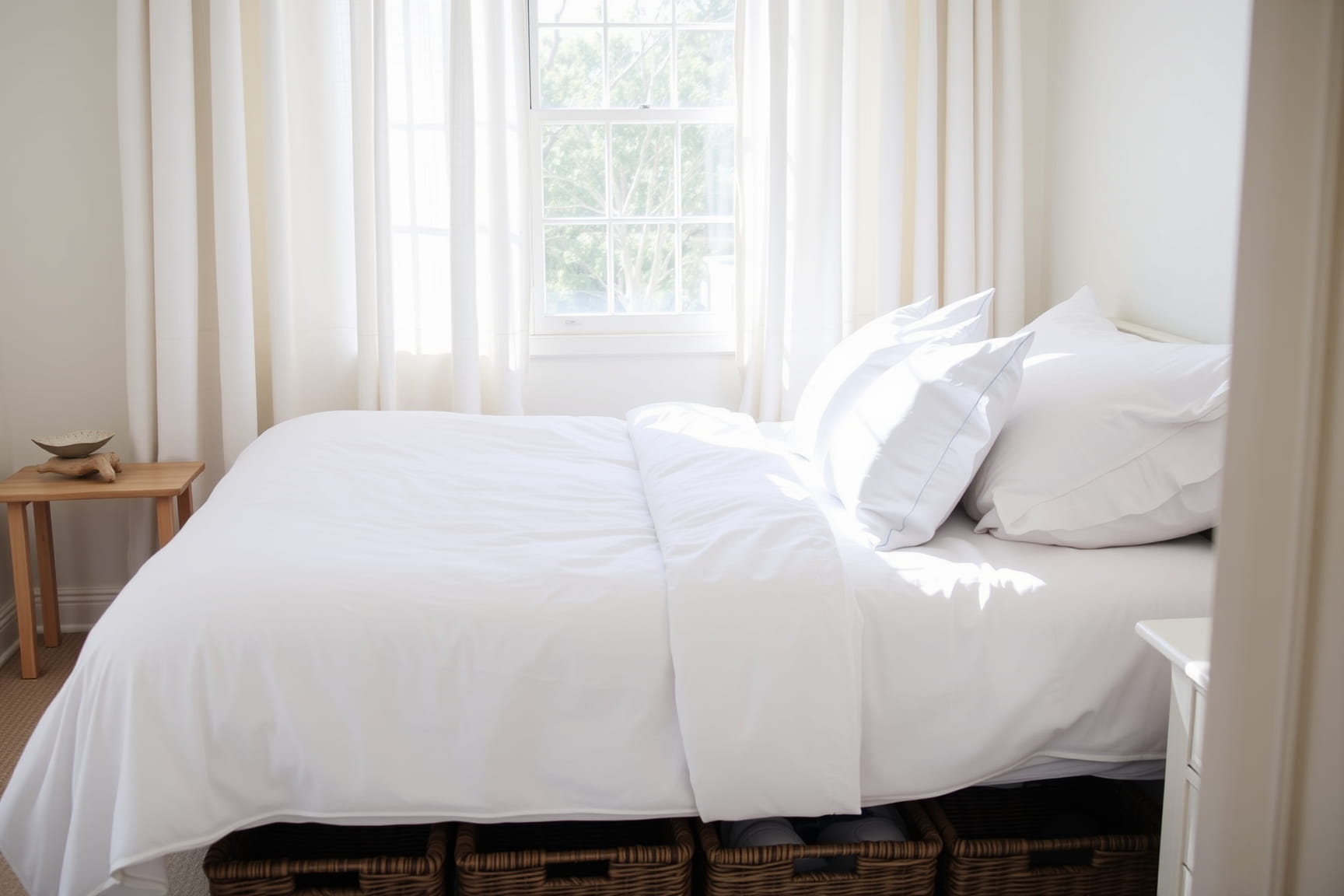
Basements, garages, and under-bed storage often hold items that are forgotten precisely because they are stored away. The one year rule for decluttering is particularly revealing in these spaces.
Open one bin at a time. Look at what is inside and ask whether any of it has been retrieved in the past year. If the answer is no, the bin itself is signaling dormancy.
This does not mean everything must go. It means the contents can be questioned as a group. If a category has been inactive for a full year, it may no longer need immediate access.
A practical step is to label bins with the last access date. This removes guesswork later. When you see a date that is several years old, the rule becomes self-evident.
Out-of-sight areas benefit from honesty. If items are stored only because there is space, the rule helps you decide whether that space is actually serving you.
The relief often comes from reducing the number of bins, not emptying them entirely.
Letting the Rule Be Enough for Now
One of the strengths of the one year rule for decluttering is that it provides a natural stopping point. Once you have checked use, you have done the work the rule requires.
You do not need to optimize storage, redesign systems, or continue sorting. The rule resolves a single question: did this item participate in your life recently?
Stopping after that decision is not failure. It is completion. You can leave items in a holding area, close the drawer, and move on.
This approach prevents decluttering from expanding into an all-day project. It respects limited energy and attention.
The rule is meant to be revisited, not exhausted in one session. You can apply it again later in another area without reopening previous decisions.
When used this way, the one year rule becomes a quiet support tool. It does not demand momentum. It simply offers clarity when you are ready to look.