
Stop Recluttering: Practical Ways to Keep Drawers, Counters, and Closets From Filling Back Up
Kitchen counters covered again with mail, a bedroom chair holding worn-but-not-dirty clothes, a bathroom drawer jammed with half-used bottles, a hallway table collecting keys, bags, and papers. This is a practical how-to article about stopping recluttering once you’ve already cleared a space. It focuses on everyday surfaces and containers that tend to refill quickly, especially in homes with limited storage, shared use, and not much spare time. This is not about doing a full declutter, adopting a system, or changing habits everywhere at once. The scope here is narrow: how clutter creeps back into already-decluttered areas, and what to do—physically and immediately—to interrupt that cycle. Each section addresses one concrete situation and one decision point, so you can apply it to a single drawer, shelf, or surface without escalating the task.
The real reason cleared surfaces refill so fast
After a drawer, shelf, or counter is cleared, it often looks calm for a short time and then slowly fills again. This isn’t because the decluttering “didn’t work.” It’s because the surface is still performing the same job it always did, just without boundaries. A kitchen counter that used to hold mail, groceries, and small appliances will continue to attract those items unless something physically changes.
Stopping recluttering starts with identifying what actually lands there. Not what you wish would land there, but what does. Open the drawer that refilled. Look at the exact mix: receipts, tools, chargers, pens, packaging. That mix is data. It tells you what problem the space is solving for the household.
The mistake is trying to protect the empty space instead of assigning it a job. Empty space without a role becomes shared territory, and shared territory fills fastest. Choose one primary function for that surface or container, even if it feels imperfect. A counter that is “for mail and bags” reclutters more slowly than a counter that is “for nothing.”
This isn’t about labeling or organizing yet. It’s about stopping the bleed by acknowledging reality. Once a surface has a job, you can contain that job instead of fighting it.
Why overflow is usually a container problem, not a discipline problem
When a bin, drawer, or shelf overfills, the default assumption is that too much is being put back. More often, the container itself is undersized or mismatched to the items going into it. A shallow drawer trying to hold bulky tools will always look messy, no matter how often it’s cleared.
To stop recluttering, pull the container out and look at it independently of the items. Ask one specific question: does this container physically match what it’s holding? If items stick up, bend, stack awkwardly, or block the drawer from closing smoothly, the answer is no.
This is where many people try to reduce belongings again. Instead, first test the container. Swap it temporarily with another one in the house. Use a deeper bin, a wider drawer, or an open basket. If the clutter calms down without removing items, you’ve identified the real issue.
This step matters because it prevents repeat decluttering. Removing items to compensate for a bad container creates fragile order. Adjusting the container creates stability. You’re not fixing behavior; you’re fixing physics.
Once the container fits, overflow becomes visible immediately instead of creeping. That visibility is what stops recluttering early, before it becomes another full reset.
How mixed-category storage quietly recreates clutter
A common recluttering pattern is the slow return of mixed storage. A drawer starts with office supplies, then adds batteries, then a screwdriver, then coupons. Each addition makes sense in the moment. Over time, retrieval becomes harder, and the drawer feels cluttered again.
Mixed categories increase decision fatigue. Every time you open the drawer, your brain has to scan unrelated items. That friction causes people to drop things in instead of putting them away properly, accelerating recluttering.
To interrupt this, you don’t need perfect categories. You need separation. Use physical dividers, small boxes, or even folded cardboard to create boundaries inside the container. The goal is not aesthetics. It’s reducing visual and mental noise.
Choose the dominant category first—the items that belong there most often. Give them the largest, clearest section. Secondary items get smaller, clearly limited zones. When that zone fills, it’s a signal, not a failure.
This approach keeps recluttering from spreading. Without boundaries, clutter behaves like liquid, flowing into every available space. With boundaries, it hits a wall early and forces a small, manageable decision instead of a future overhaul.
The role of landing zones in repeated clutter buildup
Shoes by the door, bags on the floor, mail on the counter. These are not random clutter habits. They’re evidence of missing or unclear landing zones. When items enter the home and have no obvious place to pause, they stop wherever gravity and convenience allow.
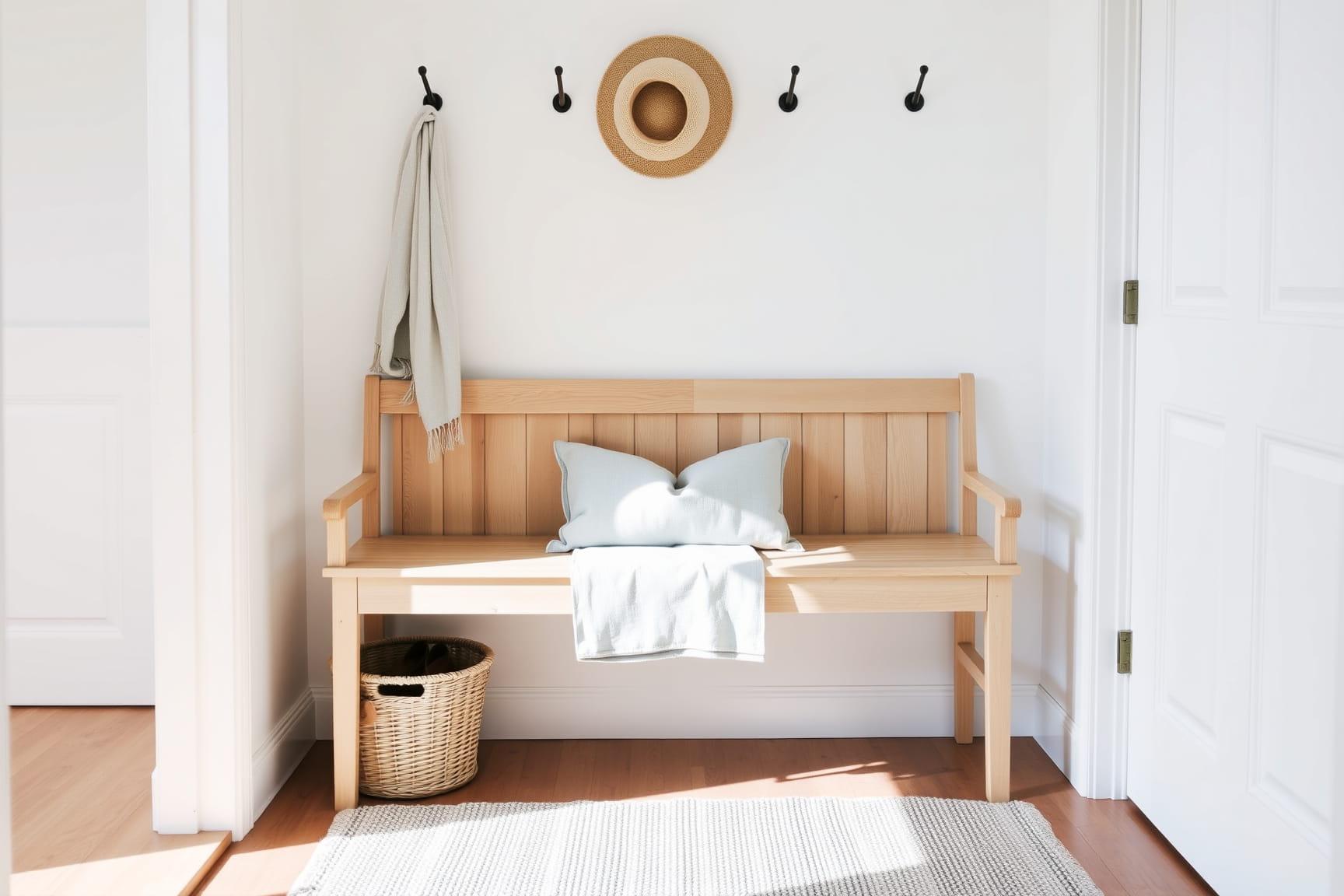
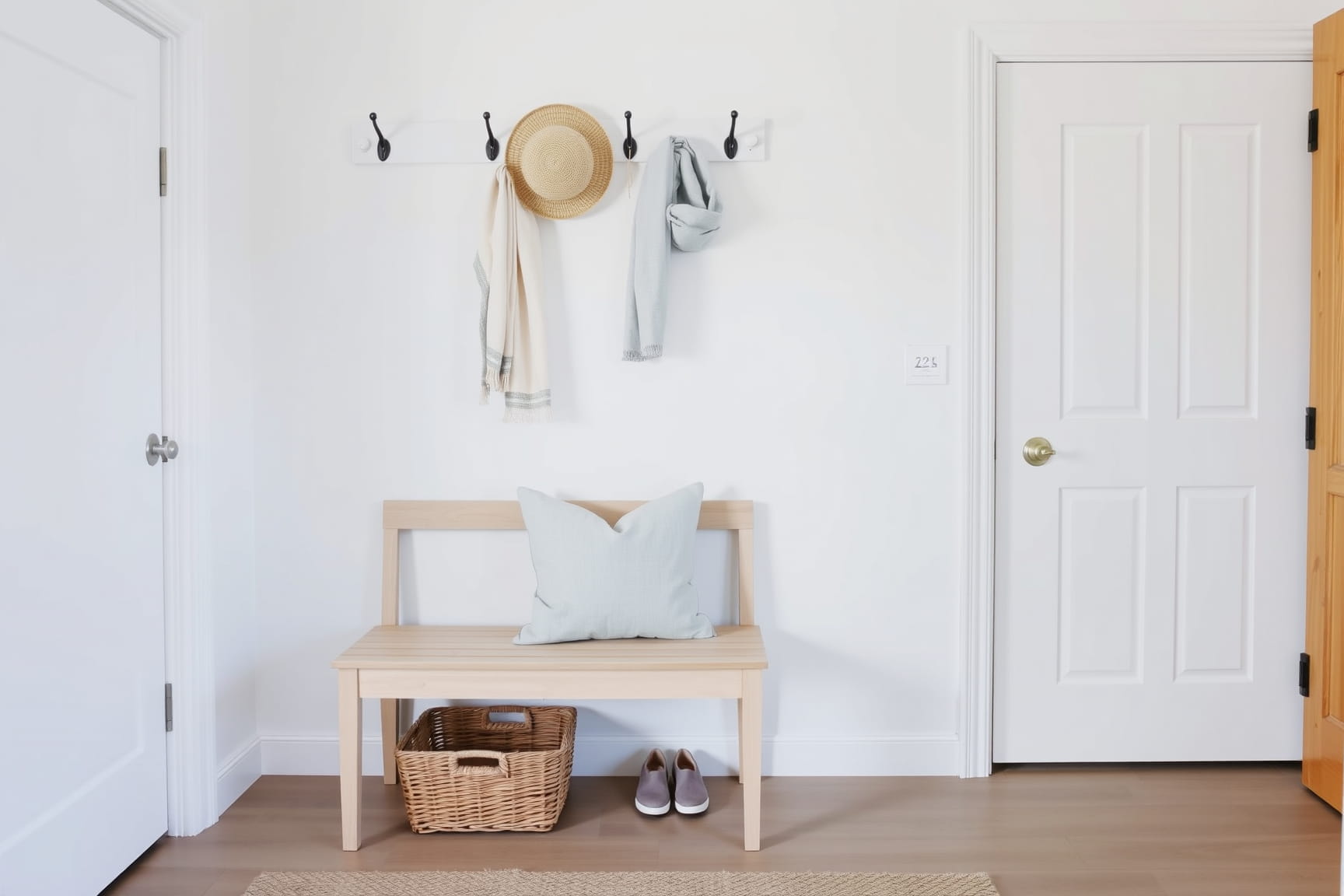
Stopping recluttering requires intentional landing zones for high-traffic items. This doesn’t mean buying furniture. It means designating a specific spot that can handle daily volume. A hook that can hold multiple bags. A tray wide enough for a week’s mail. A basket that fits all the shoes actually worn.
The key is capacity. Most landing zones fail because they’re sized for ideal behavior, not real behavior. If four people drop items there daily, the zone must hold four people’s items without overflowing.
Once a landing zone exists, resist spreading it. Don’t let mail drift from the tray to the counter. When the zone fills, that’s your maintenance signal. Clear only that zone, not the entire room.
This keeps clutter localized. Localized clutter is easier to reset and far less likely to take over adjacent surfaces.
Why “put it away later” guarantees recluttering
Many spaces reclutter because items are placed temporarily with the intention of dealing with them later. Laundry on a chair, papers on a desk corner, tools on a shelf edge. These temporary piles rarely move on their own. They become permanent by default.
To stop this cycle, remove the concept of “later” from high-risk surfaces. If an item doesn’t have a current home, it needs a holding container, not a flat surface. A box, bag, or bin labeled mentally as “decide later” is better than five scattered piles.
This works because containment limits growth. A surface invites spreading. A container enforces edges. When the container fills, you’re prompted to decide, but only about that one box.
This isn’t avoidance. It’s controlled delay. You’re preventing recluttering from multiplying while preserving the option to decide when you have time.
Once surfaces stop acting as temporary storage, they stay clear longer without effort. That physical clarity reduces the number of decisions you face each day, which is often what allows clutter to creep back in the first place.
How decision fatigue rebuilds clutter even after a good reset
A space can reclutter even when nothing new is coming in, simply because too many small decisions are required to keep it clear. Every time you open a cabinet and have to decide where something fits, your brain burns energy. When that energy runs low, items get set down instead of put away.
Decision fatigue shows up most clearly in shared or overfilled spaces: bathroom cabinets, kitchen drawers, linen closets. These areas require frequent access and constant micro-decisions. Over time, the easiest option wins, and clutter returns.
To stop recluttering here, reduce the number of decisions required per use. This means fewer categories, not more. Instead of separating items into many narrow groupings, combine them into broader ones that still make sense physically. All backstock toiletries in one bin. All cleaning tools in another.
The goal is not precision. It’s speed. When you can open a space and know instantly where something goes, you’re more likely to put it away correctly. If you hesitate, clutter builds.
This is also why over-organizing often backfires. Complex systems demand high mental effort. Simple, slightly messy systems demand less. The latter last longer.
If a space keeps recluttering, assume it’s asking too much of you. Simplifying the decision structure usually fixes the problem faster than removing more items.
Why vertical stacking invites repeat messes
Stacks look tidy at first. Piles of paper, trays of supplies, folded items stacked neatly on shelves. Over time, stacks become unstable. To access the bottom, you disturb the top. Items get put back unevenly. Eventually, the stack collapses into clutter.
Stopping recluttering often means eliminating vertical dependence. If items rely on being stacked to stay organized, they’re already at risk. This is especially common with paperwork, food containers, and clothing.
Instead, aim for single-layer storage where possible. Papers in folders instead of piles. Containers stored side by side instead of nested deep. Clothes filed or hung where each item can be removed without disturbing others.
This doesn’t require new furniture. It often means reducing how much goes into one spot so items can spread horizontally. When everything is visible and independently accessible, people naturally put things back more accurately.
If you must stack, limit the height. Two items high is manageable. Beyond that, friction increases and recluttering accelerates.
The test is simple: can you remove one item without touching the others? If not, the setup is likely contributing to the mess returning.
How unclear ownership in shared spaces causes clutter creep
Shared spaces reclutter faster than personal ones because ownership is vague. When no one is clearly responsible for an area, everyone uses it, and no one maintains it. Items get left “for someone else,” and clutter accumulates quietly.
To stop this, assign functional ownership, not moral responsibility. One person doesn’t have to clean everything, but someone needs authority over how the space works. This is especially effective in kitchens, entryways, and family storage areas.
Functional ownership means one person decides what belongs there, how much fits, and when it’s full. Others follow the physical setup, not verbal rules. Clear bins, visible limits, and obvious drop zones do more than reminders ever will.
This reduces conflict as well. When the container is full, the rule is visible. No one has to argue about whether it’s “too much.”
If a space keeps recluttering despite repeated resets, unclear ownership is often the hidden cause. Clarifying it once can stabilize the area long-term without ongoing effort.
The problem with saving “just in case” items in active spaces
Items kept “just in case” tend to migrate into the most convenient locations. Tools, spare parts, extra cords, backup supplies. These items don’t get used often, but they demand space constantly. When stored in active areas, they crowd out daily-use items and cause clutter to return.
Stopping recluttering means relocating low-frequency items away from high-traffic zones. This doesn’t mean discarding them. It means matching storage location to use frequency.
Active spaces—kitchen drawers, bathroom cabinets, desk areas—should hold items used weekly or more. Monthly or occasional items belong in secondary storage: a closet shelf, a labeled bin, a garage box.
When “just in case” items stay in active spaces, people stop putting daily items away properly because there’s no room. The clutter you see is often a symptom of storage mismatch, not excess belongings.
A simple fix is to clear one drawer or shelf of low-use items and dedicate it entirely to daily essentials. This single change often prevents recluttering across the whole area.
How maintenance triggers can replace constant vigilance
Most people try to stop recluttering by staying alert: noticing mess early, correcting it often, reminding themselves to keep up. This approach fails because it relies on attention and willpower.
A more reliable method is using physical maintenance triggers. These are built-in signals that tell you when to act, without monitoring constantly. A full bin. A tray that can’t hold more. A drawer that won’t close smoothly.
To create triggers, intentionally limit capacity. Don’t give a category more space than you’re willing to maintain. When the space fills, that’s your cue. Not before. Not after it’s overwhelming.
This turns maintenance into a response, not a chore. You don’t clean “all the time.” You clean when the container says so.
Once triggers are in place, recluttering slows because overflow is caught early and in one place. You’re no longer chasing messes across the house.
This approach works especially well for mail, laundry, kids’ items, and shared supplies—areas where clutter tends to return no matter how many times they’re reset.
Why overstuffed “catch-all” bins never stop filling
Catch-all bins seem like a solution because they gather loose items quickly. In practice, they often accelerate recluttering. When a bin accepts anything, it never signals when something doesn’t belong. Items go in easily but rarely come out intentionally.
The problem isn’t the bin itself. It’s the lack of friction. With no boundaries, the bin becomes a holding place for decisions you don’t want to make yet. Over time, it fills with unrelated items, and digging replaces using.
To stop recluttering, convert catch-all bins into limited-purpose containers. This doesn’t require sorting everything perfectly. It requires narrowing what’s allowed. For example, a bin can be “outgoing items for the week” or “tools used for this room,” not “random stuff.”
Once the purpose is narrower, reduce the bin size slightly. Oversized bins hide buildup. Smaller ones create earlier stop points.
If you open a bin and feel resistance—confusion, annoyance, avoidance—that bin is functioning as clutter storage. Redefining it restores usefulness and slows refill.
The test is simple: can you empty the bin in under five minutes if needed? If not, it’s likely contributing to recluttering rather than preventing it.
How visual clutter invites physical clutter back in
Even when items are technically organized, visual noise can make a space feel cluttered. Labels everywhere, mismatched containers, overexposed items. When a space looks busy, people treat it casually, adding to it without noticing.
Stopping recluttering sometimes means reducing what’s visible, not reducing what you own. Opaque bins, consistent containers, or simple grouping can calm a space without removing items.
This matters because people are more careful with spaces that look intentional. A drawer with three clean sections invites maintenance. A drawer with ten tiny compartments invites avoidance.
Choose one visual simplification per space. Hide one category. Remove one layer of exposure. You don’t need perfection. You need a signal that the space is “set.”
When visual clutter drops, physical clutter often follows. People pause before adding to a space that already looks complete.
This is not about aesthetics for their own sake. It’s about creating a visual stop that prevents mindless accumulation.
Why seasonal drift causes clutter to reappear
Spaces often reclutter as seasons change. Coats replace light jackets. Holiday items surface. Different tools and supplies come into daily use. If storage doesn’t adjust, items overflow into open areas.
To stop recluttering, plan for seasonal drift instead of reacting to it. This doesn’t require a full swap. It requires one flexible zone per category. A shelf, bin, or hook set that can absorb seasonal changes without displacing everything else.
For example, an entryway can have one expandable hook area. A closet can have one shelf reserved for “current extras.” When seasons shift, items move within the system instead of spilling out.
The key is expecting change. Static storage fails in dynamic households. Flexible space absorbs variation without triggering clutter spread.
If a space reclutters every few months, look at what changed. The items are usually predictable. Adjusting storage once prevents repeated resets.
How cleaning routines accidentally recreate clutter
Many people reintroduce clutter while cleaning. Items get moved quickly, placed temporarily, or shoved into the nearest open spot. Over time, these “temporary” placements become permanent.
To stop recluttering during cleaning, separate tidying from storage decisions. When cleaning, items either go to their known home or into a single holding container. Nowhere else.
This prevents the common pattern of redistributing clutter instead of removing it. A holding container limits how much displacement happens during cleaning sessions.
Once cleaning is done, the container can be addressed—or not. The key is that clutter hasn’t spread.
This approach keeps cleaned spaces stable. You’re not undoing progress every time you wipe a surface.
Cleaning should reset surfaces, not rearrange clutter. Clear rules make that possible even when time is short.
Why stopping recluttering is about containment, not control
The most stable spaces aren’t controlled tightly. They’re contained well. Items are allowed to exist, but only within defined edges. When those edges are reached, action is required.
Trying to control clutter through rules, reminders, or self-discipline usually fails. Containment succeeds because it’s physical and automatic.
Every space that stays clear has three things: a defined purpose, a physical limit, and an obvious overflow signal. When one is missing, recluttering starts quietly.
To stabilize a space, don’t ask how to be better at maintaining it. Ask where the edges are. Strengthen those first.
Once containment is clear, behavior follows without effort. People respond to physical limits more reliably than to intentions.
This is enough to hold a space steady. You don’t need vigilance everywhere. You need clear edges in the places that matter most.