
Sustainable Declutttering: Practical, Low-Waste Ways to Clear Space Without Creating More Stuff

Kitchen counters with stacked mail, reusable bags folded into other bags, bathroom drawers jammed with half-used tubes, and closets where hangers press together without gaps—this is a practical how-to guide for sustainable declutttering inside real rooms with limited space. The focus here is physical items you already own, where they tend to collect, and how to reduce volume without defaulting to trash bags or donation piles you can’t realistically move today. This is not a lifestyle essay or a minimalism challenge. It’s a step-by-step approach designed for shared homes, decision fatigue, and the desire to waste less while still clearing space.
Sustainable declutttering starts by stabilizing what’s visible. Look only at one surface: a table, a shelf, or the top of a dresser. Everything on that surface gets touched once. The decision is simple and finite: does this item already have a usable home in the house? If yes, return it there now. If not, it stays on the surface until the end of this section.
This first pass is not about disposal. It’s about reducing spread. By returning items to existing locations, you’re measuring how much excess truly remains. Stop when the surface holds only items without a clear home. That remaining group defines the actual problem you’re solving next. At this point, you can pause. The surface is clearer, and no waste has been created. That’s enough for now.
Reducing Without Replacing Storage
Plastic bins, drawer dividers, and stackable boxes often enter the house under the promise of organization. Sustainable declutttering takes a different route by working with shelves, drawers, and cabinets exactly as they are. This section focuses on how to reduce volume before adding anything new.
Open one drawer that no longer closes easily. Remove everything and place it on the nearest flat surface. Wipe the inside quickly—no deep cleaning. Then put back only the items you use weekly. These go back first, spread out, without stacking. If the drawer closes comfortably at this point, stop. The remaining items stay out.
Those leftover items are not automatically trash. Group them by function on the surface: backups together, specialty items together, “might need” items together. Now choose one group to keep in the drawer. Only one. Everything else gets assigned to an existing secondary location, even if that location isn’t ideal.
If no secondary space exists, that’s your signal to reduce quantity, not buy organizers. Remove duplicates until the drawer functions again. Excess items can be offered locally, stored temporarily elsewhere, or released if broken or expired. The goal is mechanical ease: drawers that open without force. When the drawer works, the task is complete. You don’t need to optimize further.
Letting Containers Set the Limit
Reusable containers, jars, baskets, and tote bags often multiply quietly. Sustainable declutttering uses these containers as boundaries rather than storage expansions. This section is about choosing limits instead of sorting endlessly.
Pick one container that already exists: a basket for cleaning supplies, a bin for cables, a box for reusable shopping bags. Empty it completely. This container is now the maximum allowance for that category. No new container will be added.
Refill the container with the best-condition items first. Cords that aren’t frayed, bags that fold easily, bottles with readable labels. Place them loosely, not compressed. When the container is full, stop. Everything that doesn’t fit is excess by definition, not by judgment.
Excess doesn’t require immediate disposal. It can be staged in a single holding box labeled clearly. That box is temporary and shared across categories. When it fills, you choose one exit route: donate, recycle properly, or release. Until then, nothing new enters.
This method prevents overflow without forcing decisions in the moment. Containers become visible limits instead of excuses to keep more. Once the container closes comfortably, the category is resolved. You can move on without creating waste or buying solutions.
Managing Paper Without Shredding Everything
Paper piles—mail, manuals, printed instructions, school forms—are one of the fastest-growing clutter sources. Sustainable declutttering here means reducing paper flow without defaulting to mass shredding, which often delays action.
Start with one pile only. Place it on a table. Stand, don’t sit. Sort into four stacks: action required, reference, blank or reusable paper, and discard. Discard means obvious junk only—envelopes, duplicates, expired notices. Recycle these immediately so they don’t drift back.
The action stack gets the smallest container you own, like a shallow tray or folder. If it doesn’t fit, reduce the stack until it does. Those items now have a physical deadline created by space, not intention.
Reference papers are trimmed aggressively. Keep only the current version. Manuals can often be reduced to the pages with model numbers or warranty details. Place these in one labeled folder. One folder only.
Blank or reusable paper gets placed near where it’s actually used. If there’s no such place, keep a minimal stack or release it. When the table clears, stop. The system is simple, finite, and repeatable without equipment.
Clothing Decisions That Don’t Create More Waste
Closets and dressers often hold wearable clothes that still feel wrong to discard. Sustainable declutttering addresses this without forcing donation runs or landfill guilt.
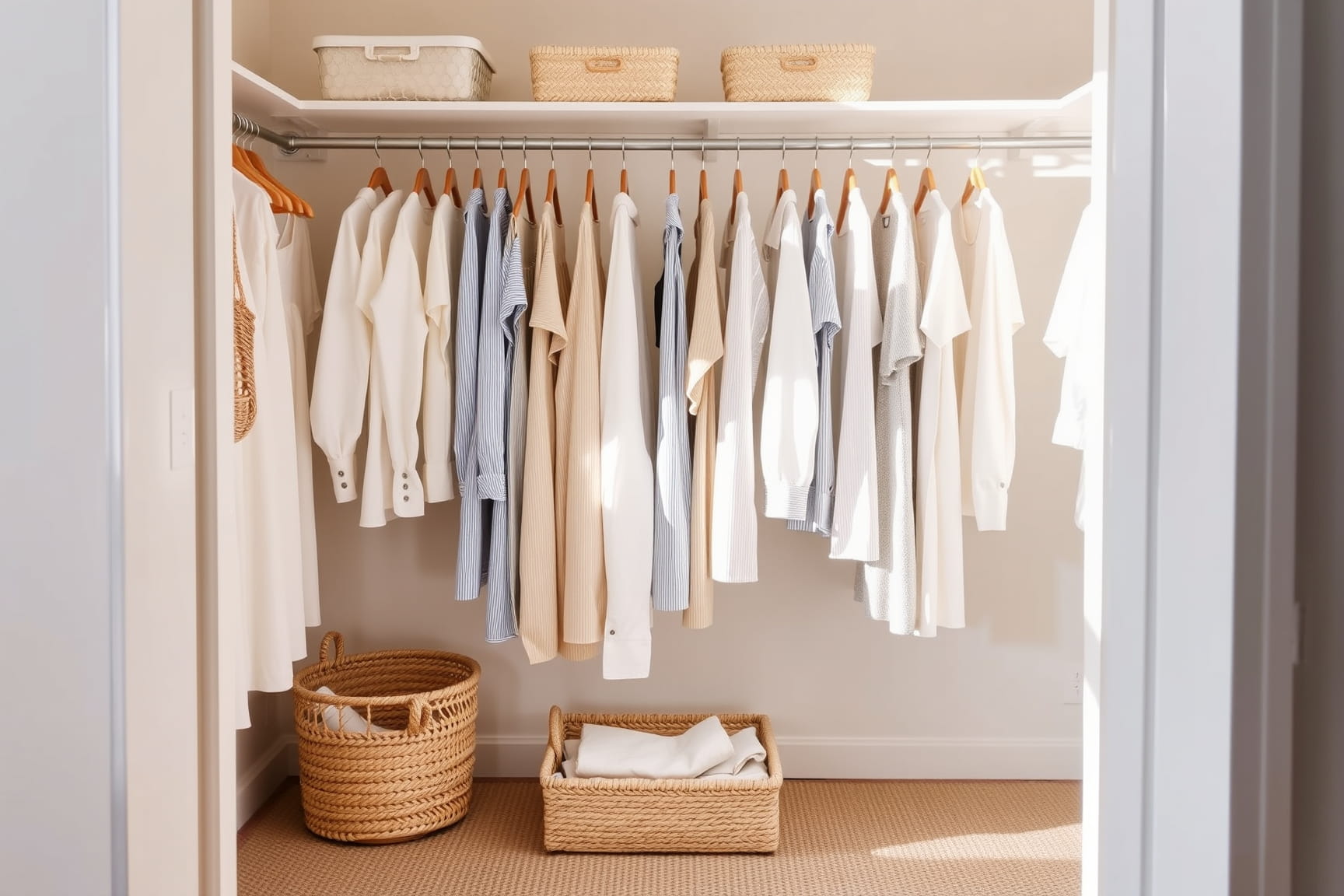
Choose one small zone: a single drawer or a two-foot section of hanging space. Remove everything from that zone. Return only the items worn in the last two weeks or suitable for the current season. Hang or fold them with space between.
The remaining clothes stay out temporarily. Check for duplicates: same function, similar condition. Keep the best one. Others become candidates for a secondary category: sleepwear, workwear backups, or layering. Assign them to an existing space only if that space can absorb them without crowding.
Anything still unplaced goes into a clearly labeled holding bag. This bag is not permanent storage. It’s a pause. If you don’t reach into it within a set period you choose—often one season—it becomes easier to release responsibly.
When the drawer slides smoothly or hangers move freely, the task is done. No shopping, no upgrades, no waste added. Just usable space restored.

Handling Sentimental Items Without Escalation
Greeting cards in a drawer, children’s artwork stacked in a box, souvenirs tucked into closets—sentimental items tend to spread quietly. Sustainable declutttering treats these items as a specific category with firm boundaries, not as an emotional free-for-all. This section is a practical guide for containing sentiment without creating guilt or additional storage.
Choose one small container you already own. A shoebox, a shallow bin, or a single drawer works. This container is the limit. Empty it completely and place the items on a flat surface. Return only the items that trigger a clear, immediate recognition. Not “I should keep this,” but “I know exactly why this matters.”
Place those items back loosely. If the container fills before everything is returned, stop. The container is full. Remaining items are reviewed once more for duplicates—similar cards, repeated photos, multiple items from the same event. Keep one representative piece.
Anything that doesn’t fit goes into a temporary holding envelope or bag labeled clearly. This is not disposal yet. It’s a pause that prevents escalation. When the container closes without force, the task is finished. You don’t need to digitize, scrapbook, or curate further. Sentiment has a home, and it’s contained.
Reworking Shared Spaces With Fewer Decisions
Shared spaces like entryways, bathrooms, and kitchen drawers collect mixed ownership clutter. Sustainable declutttering here focuses on reducing friction, not enforcing rules. This is a step-by-step approach for spaces used by more than one person.
Start with one shared surface or drawer. Remove everything and group items by owner or user. This makes volume visible without commentary. Return items one person at a time, starting with the person who uses the space most frequently.
Each person gets an equal physical allowance based on the container or surface size. When their portion fills, they stop. No negotiating beyond space. Items that don’t fit get assigned elsewhere in the house, not debated in the moment.
Labeling is optional. Physical boundaries do the work. If an item has no other home, it becomes a reduction decision later, outside the shared space.
Once items are back and the space functions—drawer opens, counter clears, hooks are usable—you stop. This method avoids long conversations and prevents new storage purchases. The shared space becomes usable again without perfection.
Preventing Rebound Clutter After Decluttering
Clearing space often leads to rebound clutter when habits don’t change. Sustainable declutttering addresses this by adding friction to re-accumulation, not by creating strict systems.
Identify one area you’ve already cleared—a drawer, shelf, or counter. This is now a “closed zone.” Nothing new enters without something leaving. This rule is physical, not moral.
Place a small visual marker at the edge of the zone: a tray, a mat, or a liner. This marks the boundary clearly. Items that land there temporarily are returned or relocated the same day. If they linger, they don’t belong.
For incoming items like mail, purchases, or hand-me-downs, create a single intake spot elsewhere. This separates arrival from storage. Intake spots are temporary by design.
If the cleared area begins to fill again, remove one item immediately. No sorting session required. This keeps volume stable without maintenance routines.
When the area stays usable for a full week, the rebound risk drops significantly. At that point, you don’t need to monitor it closely. The space has reset.
Sustainable Declutttering in Storage Areas
Basements, garages, and storage closets often hold long-term clutter. Sustainable declutttering here focuses on visibility and access rather than full cleanouts.
Choose one shelf or section. Do not empty the entire area. Pull everything from that section only. Place items on the floor in front of it.
Sort into three groups: used in the last year, seasonal but expected, and unknown or forgotten. Return the first two groups to the shelf with space between items. Heavier items go lower. No stacking beyond safe reach.
The unknown group gets placed in a single box labeled with the current date. This box stays accessible, not buried. If nothing is removed from it within a year, its contents become clear candidates for release.
Do not buy bins or shelving mid-process. Work with what exists. When the shelf is stable and items are visible, stop. Storage areas improve through clarity, not completeness.
Ending Sessions Before Fatigue Sets In
One of the most sustainable declutttering practices is knowing when to stop. Overworking leads to regret, waste, and avoidance later.
Every session should have a predefined end condition: one drawer, one shelf, one container. When that condition is met, stop immediately, even if energy remains.
Physically reset the space: close drawers, return chairs, wipe the surface lightly. This signals completion.
Leftover decisions go into clearly labeled holding zones. These zones prevent clutter spread without forcing resolution.
Stopping early preserves decision quality and reduces the urge to buy fixes later. Sustainable progress relies on restraint as much as action.
When the area functions better than before—even slightly—the session counts. You don’t need to finish the room. You’ve reduced load without creating waste.
Managing “Useful Someday” Items Without Hoarding
Extra cords, spare hardware, empty containers, and backup supplies often live under the label “might need this.” Sustainable declutttering doesn’t deny future needs, but it removes vague permission to keep everything. This section is a how-to for containing usefulness without letting it spread.
Choose one clearly defined container you already own. This might be a small bin, a drawer, or a single shelf. Label it mentally as “useful items.” That container is the only place this category can live.
Empty the container completely. Return items that serve different, specific purposes. Avoid multiples that solve the same problem. For example, keep one extension cord per room type, not five tangled together. Place items loosely so you can see what’s there.
When the container fills, stop. Anything left out does not get another container. Those items become candidates for release, recycling, or passing along. If hesitation is high, place them in a dated holding box elsewhere.
This method replaces endless evaluation with a physical limit. When usefulness has a boundary, decisions get easier. Once the container closes comfortably and you can name what’s inside without digging, the category is resolved. No forecasting required.
Working Through Kitchen Overflow Sustainably
Kitchens accumulate duplicates quickly: utensils, containers, gadgets, and small appliances. Sustainable declutttering here prioritizes daily function over ideal setups.
Start with one drawer or cabinet. Remove everything and wipe quickly. Return only the items used in the last seven days. These go back first, spaced enough to grab without shifting others.
Next, add items used weekly. Stop when the space becomes crowded or difficult to access. That is the limit. Remaining items stay out temporarily.
Check for duplicates serving the same role. Keep the one that works best or is easiest to clean. Extras become candidates for secondary storage or release.
Avoid moving items to “just in case” cabinets elsewhere. If they don’t fit here and aren’t used often, they likely aren’t needed in this kitchen.
When the drawer or cabinet closes smoothly and you can see what’s inside at a glance, stop. You’ve reduced friction without discarding everything or buying organizers.
Sustainable Declutttering for Digital Spillover
Printers, cables, old devices, and paperwork related to digital life often occupy physical space. This section addresses the physical side only.
Choose one area where tech-related items collect. Pull everything out. Group items by device or function: current devices, accessories, outdated items.
Return only items connected to devices you actively use. Keep cables paired with their device whenever possible. This reduces orphan items.
Outdated devices and accessories go into one clearly labeled box. Do not scatter them across rooms. This box is a decision buffer, not permanent storage.
If the box fills, it triggers one release action: recycling event, electronics drop-off, or manufacturer return. Until then, no new tech items enter.
Once the active items are stored accessibly and the area is no longer mixed-use, stop. Physical tech clutter is contained without requiring digital cleanup or upgrades.
Adjusting Storage to Fit Current Life
Homes often store items for past routines—hobbies paused, stages passed, capacities changed. Sustainable declutttering aligns storage with current use, not past identity.
Choose one storage zone tied to an old routine. Pull everything out. Identify what still fits your current schedule, energy, and space.
Return only items that realistically belong in your life now. Place them with space, not compression.
Items tied to former routines go into one holding container. This container represents transition, not failure. It buys time without spreading clutter.
If the container remains untouched for a defined period you choose, its contents become easier to release or relocate.
When storage reflects current use and closes easily, stop. You’ve updated function without erasing the past or forcing decisions.
Keeping Decluttering Sustainable Over Time
Sustainable declutttering isn’t about finishing the house. It’s about maintaining stability with minimal effort.
Identify one simple rule that worked during these sections: container limits, closed zones, or intake separation. Keep that one rule.
Do not add more systems. One consistent constraint outperforms multiple abandoned ones.
When clutter reappears, return to the smallest action: remove one item, clear one surface, reset one container. Avoid restarting from scratch.
Sustainable progress looks quiet. Spaces function. Decisions reduce. No constant sorting.
At this point, you’ve established methods that reduce waste and effort. You can stop here without fixing everything. The home is lighter than before, and that’s sufficient.